I am fully aware that I will receive some pushback for this post, but it’s one that I feel needs to be written. Most of my author friends are on Facebook. Hell, many of them have created their own communities on the platform and depend on it for advertising revenue.
I understand the draw and can list a ton of valid rebuttals. This was not a rash decision. It took a lot of time and effort to reach this point, but now I can proclaim with confidence:
No, I am not on Facebook. And you shouldn’t be either.
I should start by saying that I was on Facebook for a long time. When I was a new author, I dove head-first into the marketing machine and swallowed every tip I could find. Interacting with Facebook wasn’t a shallow dabble or passing interest. I was in it to win it. I invested my time, my attention, and my money.
And now I regret every second of it.
My decision to leave Facebook wasn’t due to a single thing. It was an amalgamation of many things, a clog of degradation that finally kicked me out of the haze.
This was an ethical decision.
Marketing is about sales. Everything I do apart from writing is about selling said writing. When I posted something on social media, it was with the hope that it would spark enough interest to buy one of my books. It was that simple, an emotionally sterile transaction.
However, posting on Facebook crossed an ethical line.
The founders of Facebook readily admit that the platform was designed to be addictive. It’s a virtual slot machine that creates gambling addicts. So when it came time to hand over money for the privilege of showing ads to those addicts, I hit a brick wall of morality. The ads I ran didn’t last long. It felt … evil.
I have no problems purchasing ads that leverage mailing lists. BookBub is a prime example. Readers sign up for the service and expect deals on books. I then purchase ads that fulfill that promise. It’s a neutral transaction that benefits everyone involved.
Facebook, on the other hand, is acting like a drug dealer. They use sophisticated algorithms to keep users doom-scrolling, then throttle traffic to business pages and charge to get it back (the much-hated “boosting” feature). Their ad service is notorious for sucking budgets dry, which is why countless businesses are fed up with the platform.
And this is on top of the endless scandals, privacy issues, and shocking overreach. Two words: Cambridge Analytica. Facebook has become an answer to “What plagues modern society?” It’s no longer a social hub for friendly banter and funny memes. As tech guru Jaron Lanier rightly points out, it has mutated into a “behavior manipulation engine.” It is truly alarming how many people now cite Facebook as their primary news source. It’s a cesspool of insanity that I want no part of anymore, personally or professionally.
I am willing to bet that many famous authors resent their fame.
Over the years, I have studied the profiles of many big-name authors like Stephen King and J.K. Rowling. I remember gazing at their massive followings with starry-eyed envy. If only I had those numbers, I thought. Imagine the influence I could wield.
And then Stephen King had a very public fallout with the political community.
And then J.K. Rowling had a very public fallout with the trans community.
I watched both incidents with utter horror. The battles were so vicious that they caught the attention of worldwide media, which sparked a tidal wave of hit pieces. Even George RR Martin wasn’t immune, as his Hugo Awards debacle severely wounded his clout.
Now I think to myself, Thank goodness I do not wield that level of influence.
Denial is a powerful drug.
This decision was not made on a whim. Abandoning buyer pools goes against all business logic, so there has to be a damn good reason to do so.
There were times when I thought, Meh, it’s not harming anything to keep my account active. Other times I thought, Maybe I’ll unlock the secret that turns engagement into gold. I went through a lot of bargaining, justification, and outright denial.
And then I read these books:
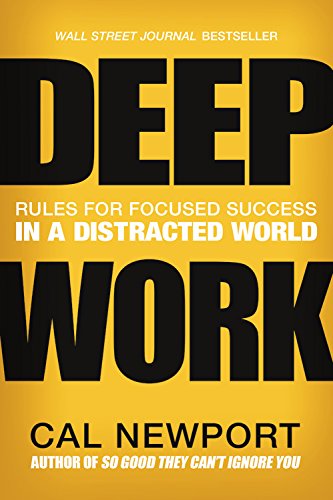
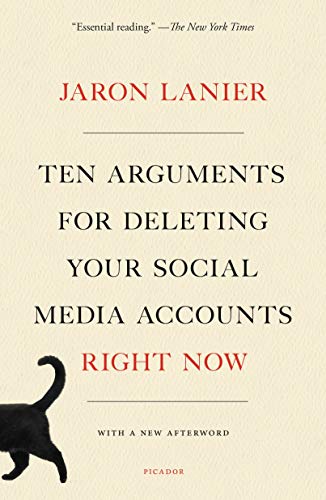
Deep Work and Ten Arguments are the most relevant to this discussion, but anything by Cal Newport or Jaron Lanier will do the trick. Both are titans in the IT field, not just eager chaps with ideas to sell. Newport is an Associate Professor of Computer Science at Georgetown University. Lanier is Silicon Valley royalty and a founding father of virtual reality. When they speak, powerful people listen.
Not that I’m powerful, but damn did I listen.
Their scathing critiques of social media are difficult to ignore. So difficult, in fact, that I immediately deleted my Facebook account and continued through the lot.
I have embraced the Trinity of Ownership: website, blog, and mailing list.
A common refrain in digital marketing is “never build your house on rented land.” This is the entire business model of social media, in that they control access to your own audience.
You may think that you own your Facebook Page, but they erect paywalls between you and your subscribers, effectively holding your engagement hostage. You can lessen that barrier with “boost” fees, but that’s an incredibly sinister practice. It’s the social media equivalent of baggage fees.
Instead, authors should focus on the three silos they have full control over: their website, blog, and mailing list. The time you spend inside the virtual slot machine is far better served creating reader magnets or learning how to leverage SEO.
The only cure is deletion.
I firmly believe that no author should reside on Facebook, but I also sympathize with those who are bound to it. It’s hard to walk away from something that you have devoted so much time to. But that’s an illusion. Facebook owns that effort. They are the ones who benefit, and the only way to take it back is to abandon the Zuckerberg Empire.
There is a growing backlash to this digital cancer and I can sense a mass exodus on the horizon. Businesses are waking up to the fact that they don’t need Facebook (or any other social media) to be successful. I can only hope that the grand departure comes sooner than later. In the meantime, I suggest watching The Social Dilemma, a poignant documentary that expertly dissects the pitfalls of social media.
For now, that seems like a good stopping point. (And perhaps a good starting one as well.)
It should also go without saying, but if you see me on Facebook, that ain’t me. Social media impostors are annoyingly common in the publishing world. Please report any account you find and join my newsletter for actual news and updates.